Start an inquiry→
Calcium Silicate Board Elementor Modules Preview Calcium Silicate Board Production Line | MGO Machine Hub

Material route / Calcium silicate board

Calcium Silicate Board
Production Line

Plan the line around the board range, material system, forming and conditioning route, finishing requirements, output basis and real factory conditions—not a generic equipment list.
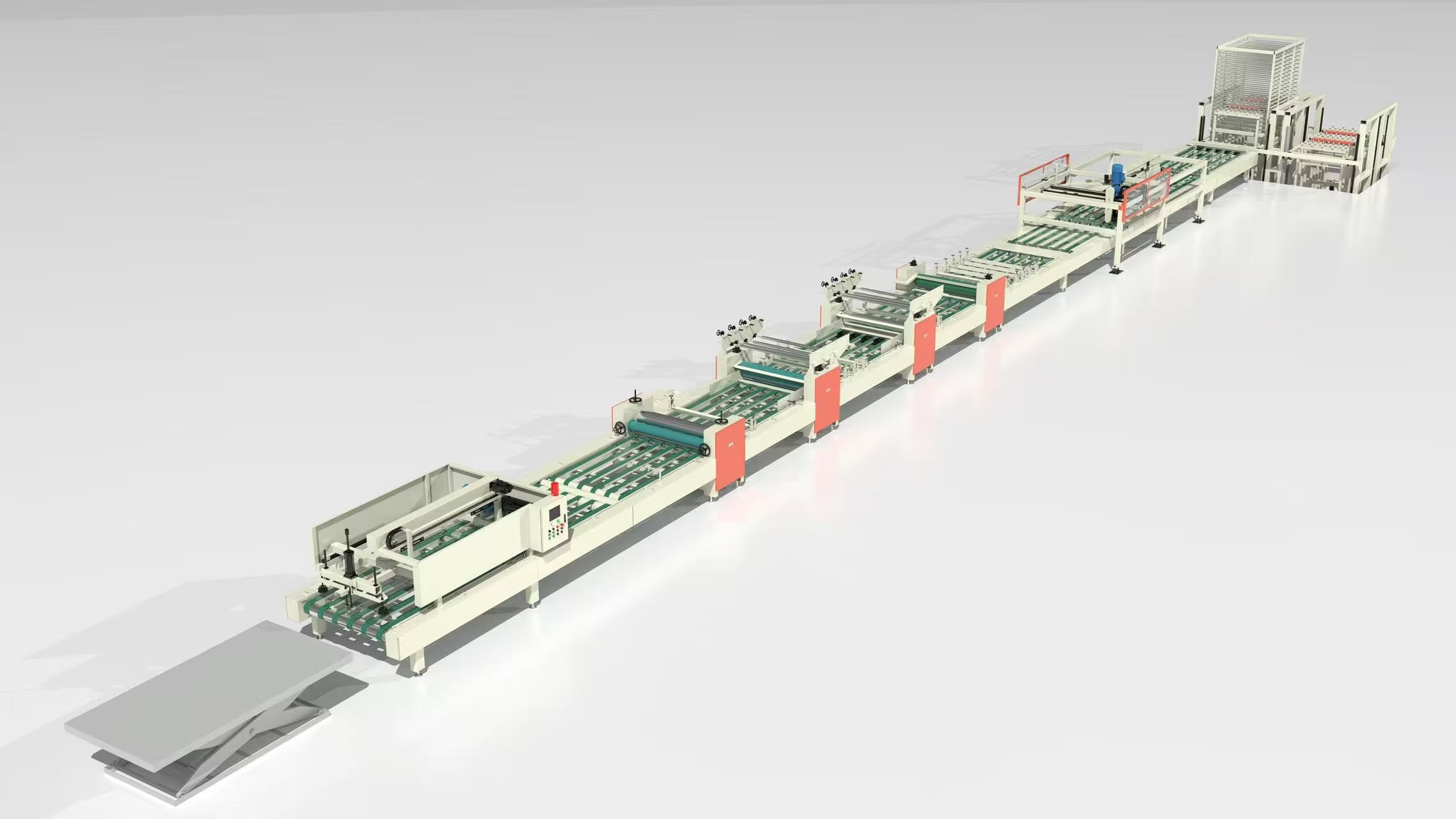
Connected equipment concept for a building board production line
PROCESS-LED LINE PLANNINGOne project basis from raw-material preparation to finished-board handling.
01Define the board range
02Map the production route
03Balance capacity and flow
04Plan for the actual factory
01 — OVERVIEW

A production system, not a machine list

Start with the product.
Engineer the route.
Configure the line.

A calcium silicate board line should be planned from the intended product and process conditions. Product range, material preparation, forming, conditioning, handling and finishing decisions are linked.Use this page to structure the project discussion before comparing equipment proposals.

Process route / from inputs to finished boards

Connect every stage
into one production flow.

The route below is a planning framework. Confirm which stages apply to the chosen formulation, board specification and operating concept; identify optional processes separately from the core line scope.

01INBOUND

Receive & store

Plan raw-material receipt, identification and controlled storage.

02PREPARE

Meter & mix

Define dosing, feeding and mixing around the material system.

03TRANSFER

Deliver material

Coordinate transfer from preparation into the forming section.

04FORM

Set board form

Review forming method, thickness setting and board support.

05CONDITION

Demould & cure

Confirm demoulding and required curing or conditioning steps.

06FINISH

Cut & sand

Include sizing, sanding and inspection as required by product.

07OUTBOUND

Stack & dispatch

Plan handling, packing, storage and finished-goods movement.

ROUTE BOUNDARYShow which stages are confirmed, formulation-dependent or optional. Optional finishing should be connected to a defined finished-product requirement, not assumed as standard scope.

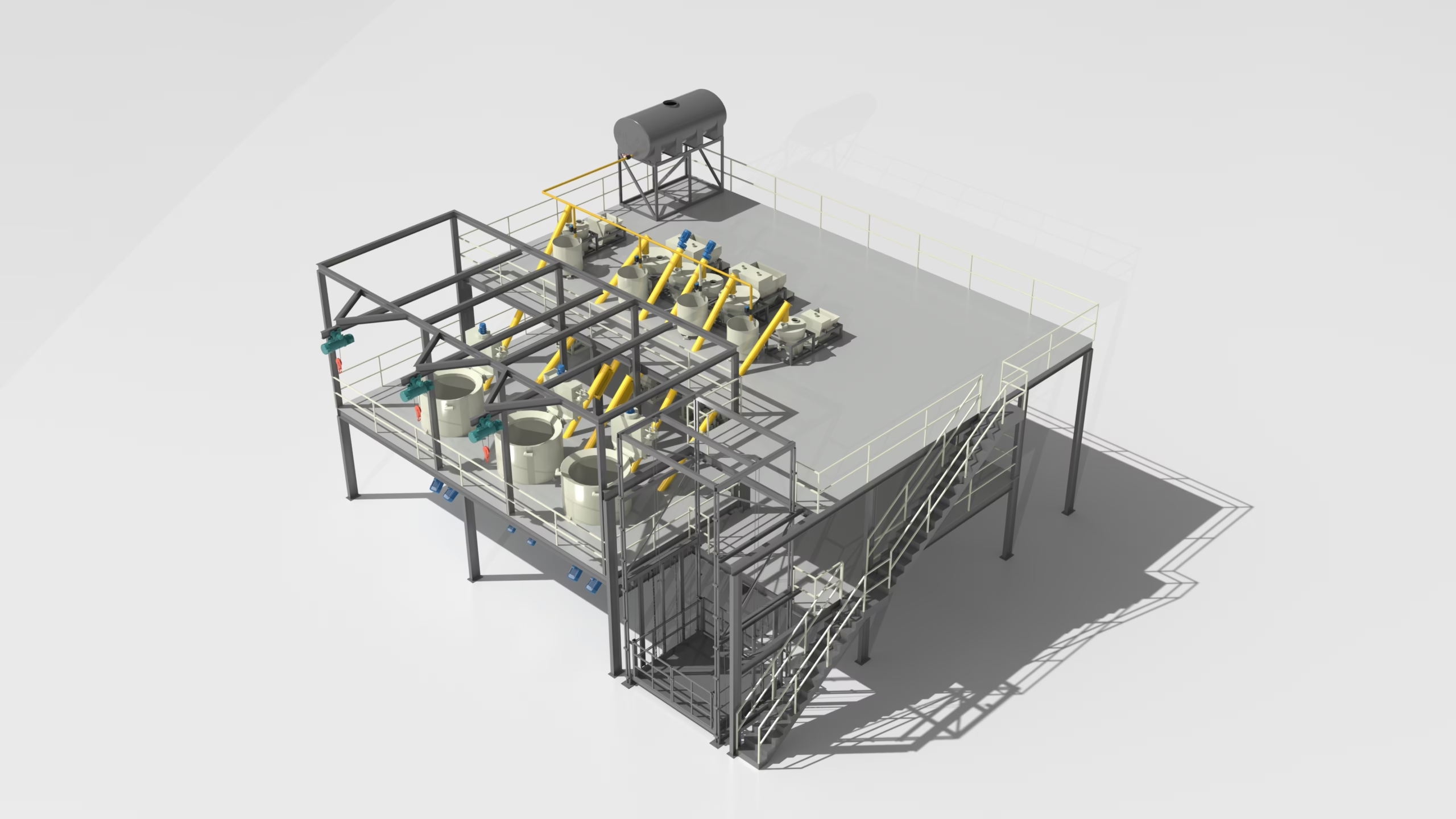
Material feeding and mixing equipment used in board manufacturingPRODUCT BASIS / MATERIAL ROUTE

01 / Define the product first

Specify the board range before the equipment list.

“Calcium silicate board” is not a complete production requirement. Record the target product range and operating conditions so the line concept has a clear reference point.

01Applications and target customer groups
02Board length, width and thickness range
03Density, surface and edge expectations, if specified
04Raw-material system and formulation status
05Cutting, sanding and downstream finishing
06Inspection, documentation, packaging and dispatch
MULTIPLE PRODUCTS?

Choose a reference board for planning.

If several sizes or product variants are planned, identify the main operating condition and list changeovers or special cases separately. This helps distinguish the base line concept from provisions that may affect flexibility, process interfaces or project scope.

Project definition / manage uncertainty

Make confirmed inputs,
assumptions and open decisions visible.

Incomplete early information is normal. The important part is to label it clearly and track decisions that could change process scope, equipment selection, layout or capacity.

01 / CONFIRMED

Evidence-backed inputs

Information supported by drawings, specifications, material data or established production records. Use these inputs as the current design basis.

02 / PROVISIONAL

Working assumptions

Values suitable for concept development but requiring review or approval. Mark the owner and the point at which confirmation is needed.

03 / OPEN DECISIONS

Scope-affecting questions

Examples include material preparation responsibility, product changeover frequency, storage duration, finishing level and auxiliary-system boundaries.

GOOD PRACTICECarry each assumption into the proposal and decision log instead of burying it in a general equipment description.

Capacity / comparable planning basis

Define output against a
specific product and shift model.

Capacity statements are only comparable when the reference product, operating hours, product mix, changeovers and output definition are aligned.

CAPACITY BASIS

What does the stated output actually represent?

State whether a figure is theoretical, planned or saleable output and which board size and thickness it uses. Treat the line as a balanced route from preparation through downstream handling.

INPUT / 01

Reference board

Dimensions, thickness and product variant used for the calculation.

INPUT / 02

Operating schedule

Hours per shift, shifts per day and expected operating pattern.

INPUT / 03

Product mix

Planned changes in size, thickness, formulation or process settings.

INPUT / 04

Line balance

Identify the stage most likely to govern overall production rhythm.

LINE BALANCEA faster individual machine does not automatically increase finished-board output when conditioning, transfers, cutting or stacking remain constrained.

Factory planning / before positions are fixed

Let the building shape the line concept.

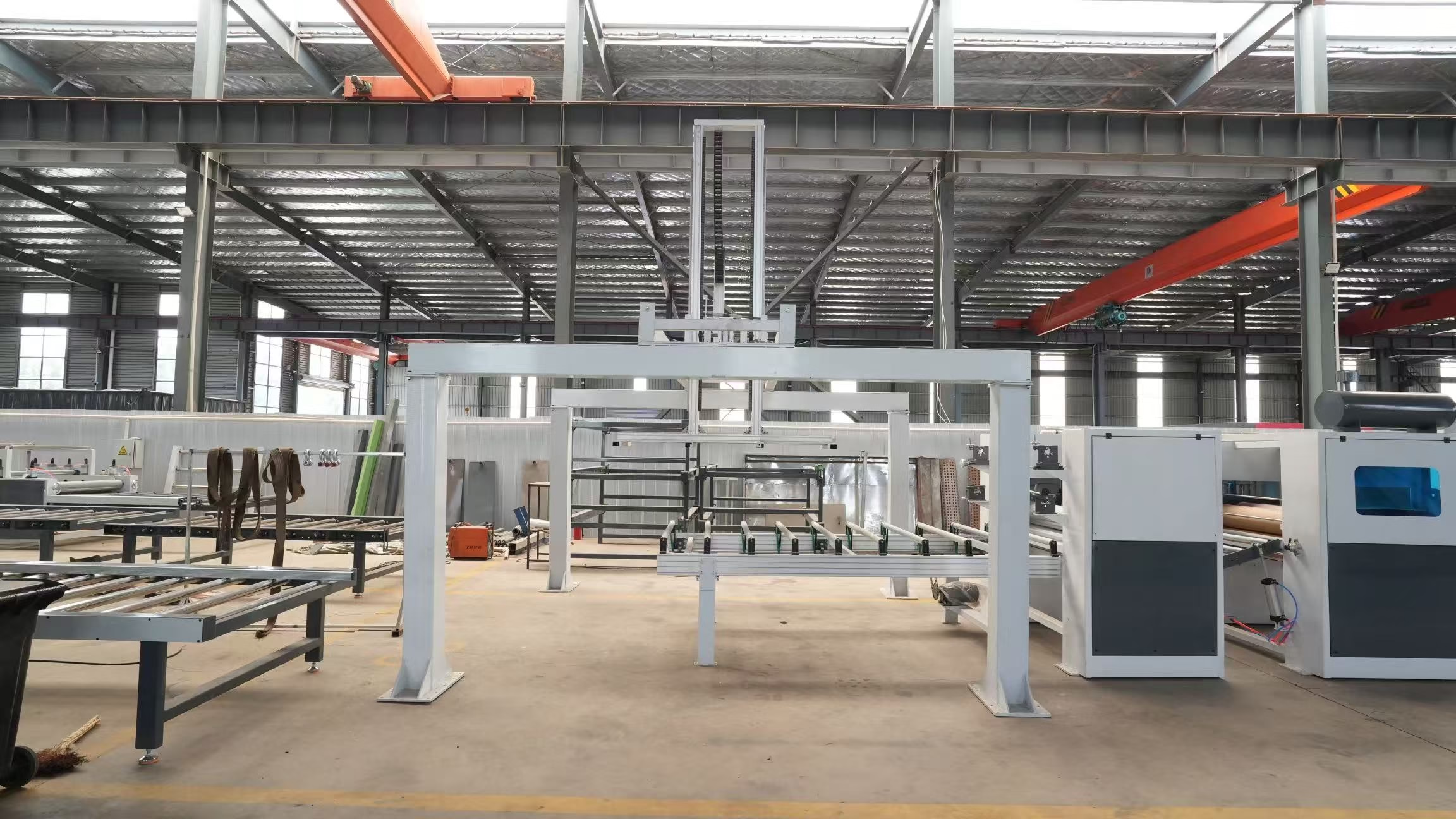
Factory conditions affect orientation, intermediate transfers, operating access and future expansion. Provide available site information early so constraints and unknowns can be reviewed before equipment positions are finalised.
01Dimensioned building drawing and clear height
02Column grid, doors and delivery access
03Floor and foundation information, where available
04Raw-material receiving and product dispatch routes
05Utility supply points and known capacity
06Environmental, extraction and emergency access needs
Industrial production equipment arranged within a factory buildingFACTORY CONDITIONS / SITE INPUTS
LAYOUT CHECKLISTUse the factory layout requirements checklist to prepare site information before equipment positions are fixed.

Material preparation / forming interface

Coordinate feeding and mixing
with the forming stage.

Preparation equipment should be considered as part of the whole process route. Review material handling, controls, transfer distances and what happens when a downstream stage pauses.

01 / DOSING

Material inputs

Document material types, delivery forms, storage needs and the dosing considerations provided by the project owner.

02 / SEQUENCE

Process coordination

Discuss sequence control, mixing-time basis and how preparation is coordinated with board forming.

03 / INTERFACE

Transfer & cleaning

Review transfer distance, cleaning requirements and response to a downstream interruption.

RELATED SYSTEMSee the feeding and mixing system as one route component, with the forming and transfer interface kept in view.

Verification / before delivery

Build traceability from requirement to handover.

Plan how the agreed scope will be checked. The verification basis should fit the contracted equipment and the conditions that can realistically be reproduced before shipment.

01

Design and drawing review

Confirm the current project basis, interfaces, revisions and agreed arrangement.

02

Equipment and component scope

Review the supplied modules and options against the documented scope.

03

Control and operating functions

Agree which control functions and sequences can be reviewed under factory conditions.

04

Inspection and test records

Define the records, observations and evidence that will be retained.

05

Outstanding items

Assign each open item an owner, next action and appropriate review stage.

PROJECT CONTROLRecord changes against the same reference used by the owner, engineering team and supplier so the approved basis remains traceable.

Prepare for a technical discussion

A clearer enquiry starts
with a usable project brief.

Share what is known and mark what remains provisional. If an input is unavailable, identify who can confirm it and when.

PRODUCT

Board range

Application, dimensions, thickness, density or surface expectations where available.

MATERIAL

Material & formulation

Raw-material information, formulation status and preparation responsibilities.

OUTPUT

Capacity basis

Reference product, shift schedule, product mix and output definition.

PROCESS

Route expectations

Forming, conditioning, demoulding, finishing and handling requirements.

FACTORY

Site information

Factory drawing, utilities, access, receiving and finished-product movement.

PROJECT

Automation & destination

Automation preference, project location, timeline and open decisions.

Start with your board requirement

Let’s define the production route together.

Send your board range, material information, target output and factory drawing. The next step is to confirm the design basis before equipment configuration.

Discuss a calcium silicate board project

Questions to answer
before configuration.

Why define the board range before selecting equipment?

Board dimensions, thickness, material route and finishing requirements influence the process stages and equipment interfaces. A generic equipment list cannot represent every product condition equally.

Can provisional information be used for initial planning?

Yes. Label it as provisional, note the basis and track who will confirm it and by when. Assumptions that affect scope, layout or capacity should be reviewed before final configuration.

What should a production capacity statement include?

Include the reference board, operating schedule, product mix, changeover assumptions and whether the figure describes theoretical, planned or saleable output. This makes proposals more comparable.

When should the factory drawing be provided?

As early as possible. A preliminary dimensioned drawing can reveal constraints involving line direction, material flow, access, utilities and expansion before equipment positions are fixed.

How should optional finishing processes be handled?

Connect each optional process to a defined finished-board requirement. State whether it is part of the confirmed line scope, a future provision or still under evaluation.