
Market & use
Intended applications and target markets for the board range.
Material route / fiber cement
Build a connected line concept from board specifications, raw-material information, output expectations and factory conditions. Review process interfaces before equipment configuration begins.
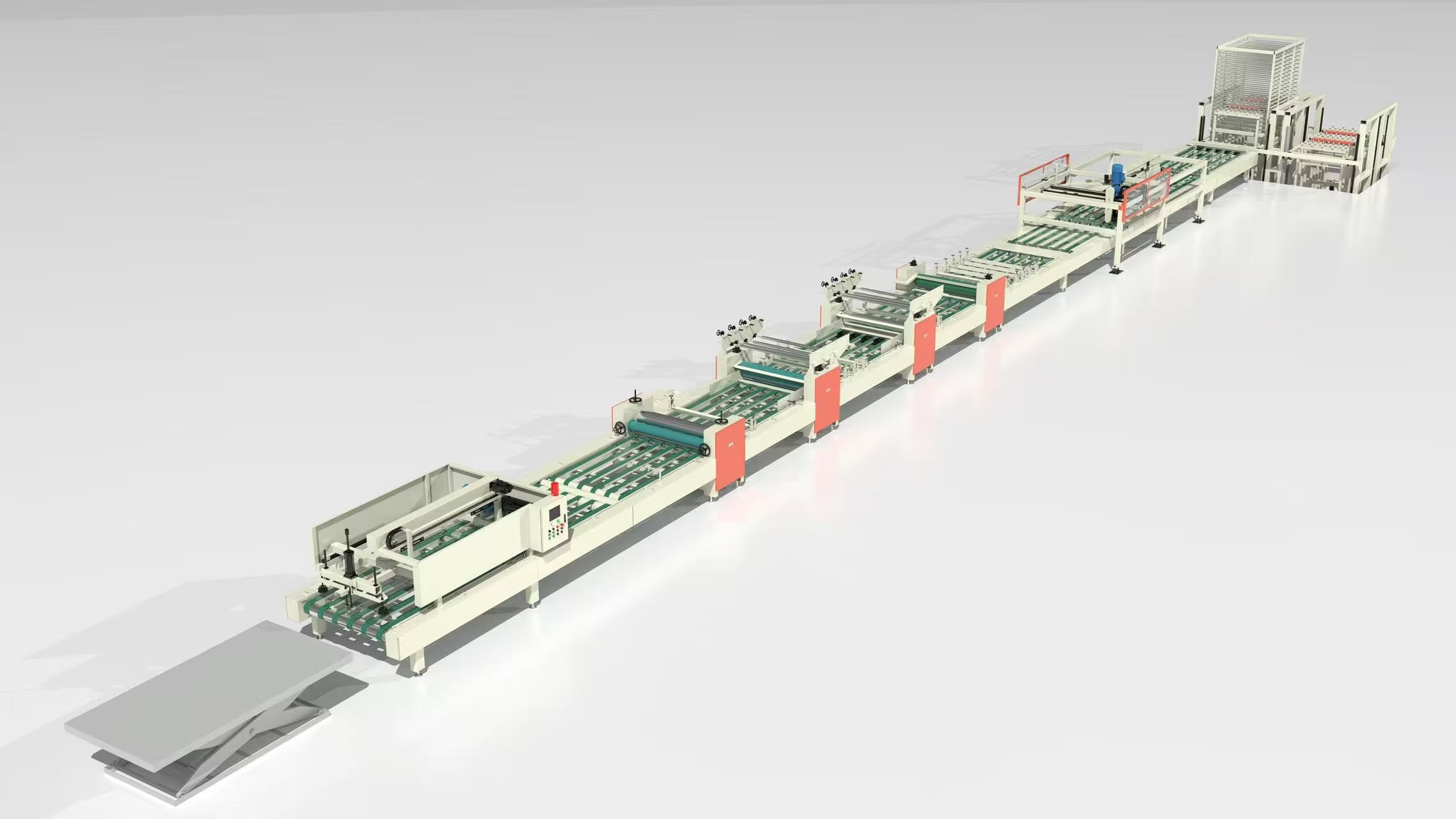
From board requirement to line concept
Board specification
Record confirmed requirements and mark unknowns for review. This keeps early line planning useful without disguising assumptions as final data.
Intended applications and target markets for the board range.
Nominal formats, thickness range and expected product mix.
Surface expectations, edge treatment, tolerances and downstream handling.
Selected materials, available formulation information and preparation responsibilities.
Tests and acceptance requirements that need to inform process planning.
Stacking, packaging and finished-board movement requirements.
A connected manufacturing route
The exact route depends on the selected material system. Transfer, board support, line rhythm and buffers connect each stage.
Material receiving, storage and preparation.
Dosing, mixing sequence, cleaning and repeatable transfer.
Forming concept and board support for the next stage.
Demoulding, transfer and formulation-specific conditioning.
Finishing based on the sellable board specification.
Quality checks, reject handling, stacking and shipment preparation.
Capacity and operating basis
Two capacity claims are comparable only when the reference board and operating assumptions are clear.
Size, thickness and product specification tied to the target.
Operating hours, shift pattern, cleaning and maintenance windows.
Expected product mix and frequency of format or product changes.
Clarify whether target is nominal, planned or saleable output.
State inspection approach and assumptions that affect good output.
Include transfer, conditioning, finishing, stacking and temporary storage.
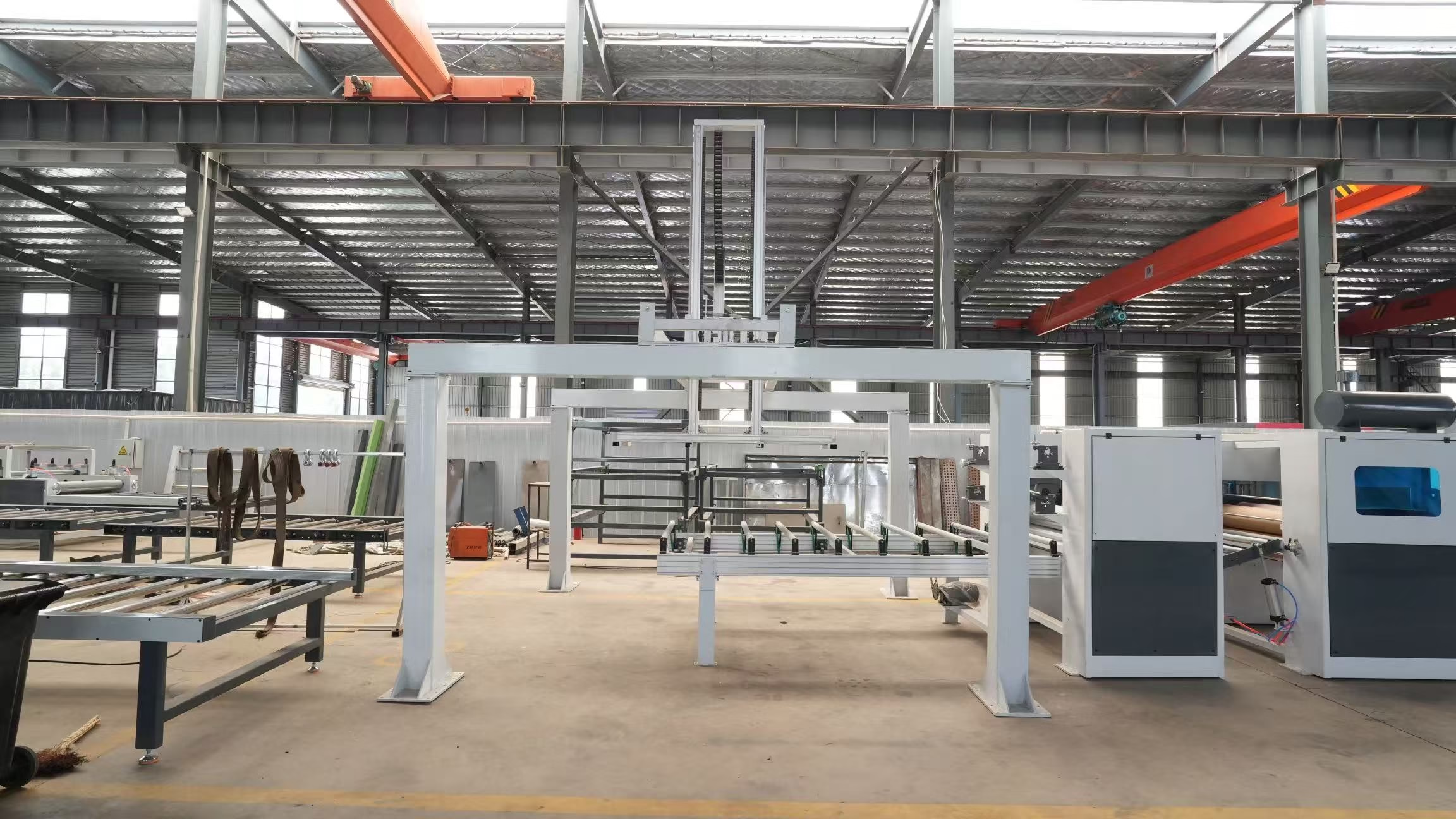
Factory and system interfaces
Confirm building length, width and clear height, columns, floor condition, vehicle access, utilities, material routes, finished-board storage and maintenance access before finalizing the arrangement.
Start with board dimensions, thickness range, application, raw materials, output basis, finish, factory conditions and automation expectations. Mark missing items for confirmation.
A preliminary concept can be discussed, but building dimensions, logistics, utilities and maintenance access should be checked before fixing the arrangement.
No. Tie the figure to a reference board, operating schedule, product mix, changeovers and output definition.
Feeding, mixing, forming, transfer, conditioning, finishing and handling should be evaluated as a connected production route.
Start with your board requirement
Send the board range, material information, capacity basis and factory drawing. The engineering discussion can then address process interfaces and open decisions.