
Production Line Planning
How to Plan a Complete
Building Board Production Line
A practical framework for defining board specifications, raw materials, capacity, factory requirements and automation before machinery configuration begins.
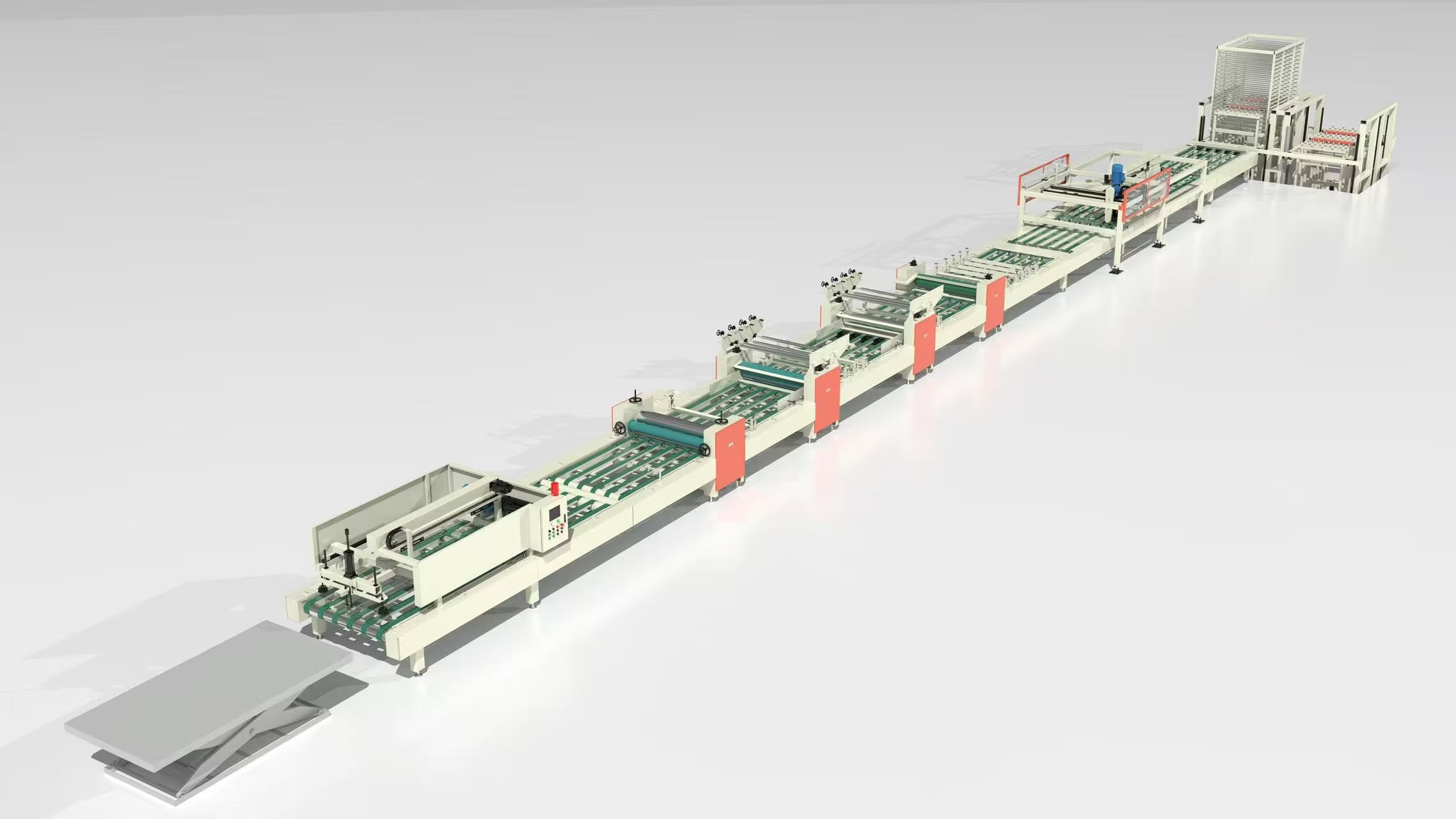
Article summary
A building board production line should not begin with a machine list. It should begin with a clear production brief.
Equipment decisions depend on the finished board, raw-material route, target output, factory conditions and required processing stages.
Define the seven project inputs below before entering the board production engineering process, so every machine can operate as part of one practical system.
01 — Finished board specification
Start with the finished board,
not the equipment.
Whether you plan to manufacture fireproof boards, fibre-cement boards, calcium silicate boards, magnesium oxide boards or another cement-based panel, the production brief should first describe the product the line must deliver.
Board dimensions, density targets, surface expectations and downstream operations all affect the production route. For fibre-cement flat sheets, ISO 8336:2017 illustrates why relevant standards must be identified early.
Engineering principleA clear board definition enables the engineering team to assess the process as one system rather than matching equipment by name alone.
02 — Capacity and operating basis
“High capacity” is not enough
for a useful quotation.
Define expected saleable output per shift, operating schedule, product mix and the assumptions behind the target. Capacity must also be reviewed alongside maintenance access, changeover time, material flow and quality inspection.
Shift pattern
How many shifts and operating hours will the factory run?
Product mix
One standard size or frequent changes in dimensions and thickness?
Output basis
Finished saleable boards or theoretical machine throughput?
Bottleneck
Which stage is most likely to constrain the complete line?
Expansion
Reserve space and interfaces for future production growth.
Operating loss
Allow for start-up, cleaning, inspection and maintenance.
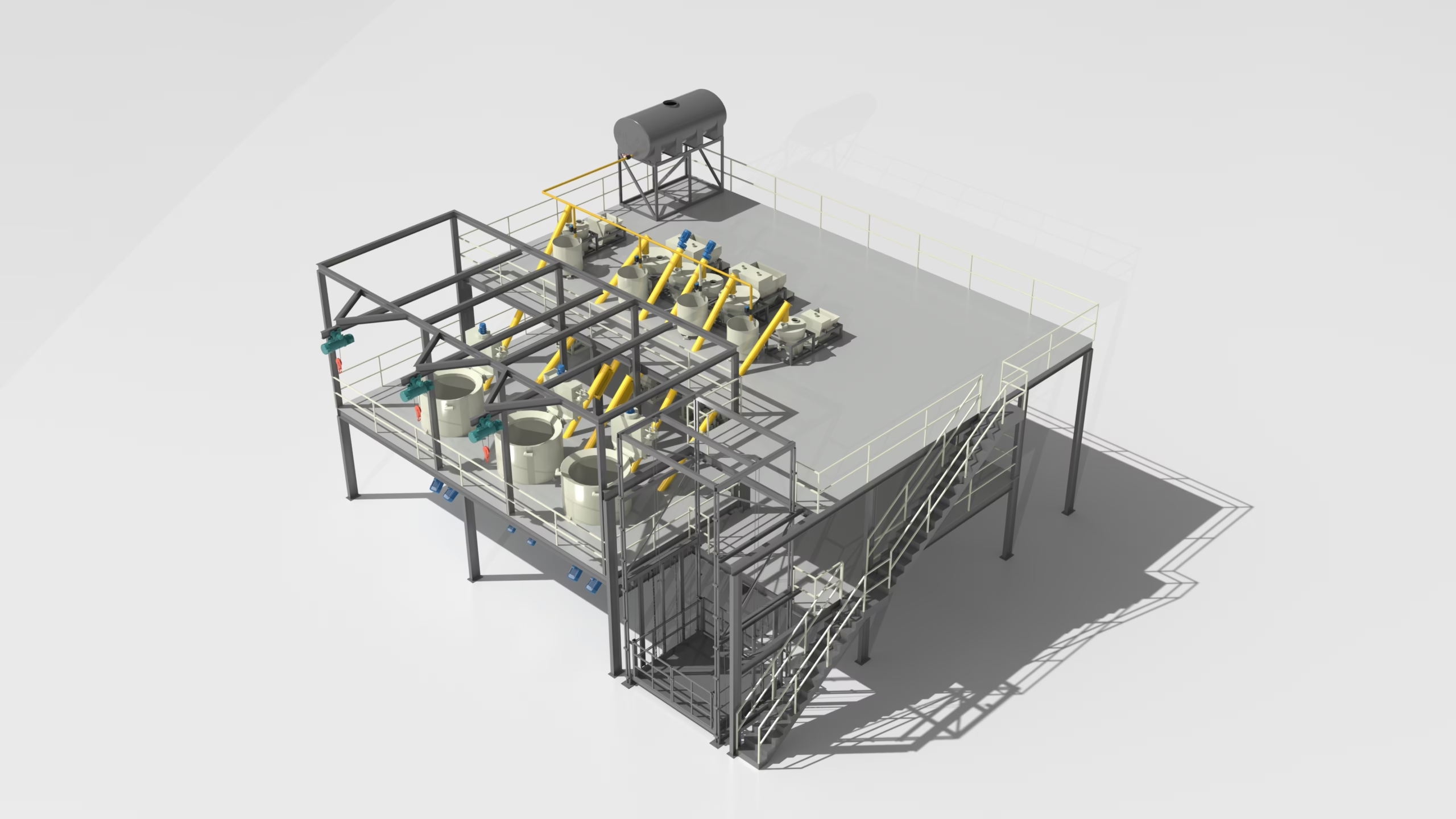
Storage, dosing, mixing, dust control and operator access must be configured around the actual materials and formulation.
03 — Raw materials and formulation
Document the material route
before selecting equipment.
Raw materials define the first part of the line. Record what is locally available, its delivery form, storage conditions, particle characteristics, moisture sensitivity and required batching accuracy.
Ingredients: Main binders, fillers, fibres and additives.
Storage: Delivery and storage method for each material.
Dosing: Required weighing, batching and dosing points.
Handling: Dry versus wet handling and moisture control.
Safety: Cleaning, dust control and operator access.
Process support: Formula status and trial-production requirements.
The feeding and mixing system must be selected around the actual material route, not only the planned output.
04 — Complete production route
Connect every stage from material entry
to finished-board dispatch.
A complete board line is a connected process. A fast forming section does not create a fast line if cutting, handling or finishing cannot accept the same production rhythm.
Receiving, Dosing & Mixing
Raw-material entry, accurate batching and uniform mixing.
Board Forming
Material distribution, reinforcement and board structure. Read the board forming system configuration guide.
Curing or Treatment
Material-specific conditioning before separation.
Demoulding
Controlled separation, transfer and surface protection.
Cutting & Sizing
Finished dimensions, trimming and extraction.
Surface Preparation
Sanding and calibration for controlled thickness.
Stacking & Dispatch
Support, stacking, packaging and finished-goods flow.
Laminating, Grooving & Profiles
Finishing processes matched to the final application.
05 — Dimensions, handling and deep processing
Board size affects more
than the cutting stage.
Dimensions influence conveyor width, tooling, handling equipment, stacking logic, aisle space and downstream compatibility. Define the complete sequence before choosing cutting and transfer arrangements.
06 — Factory layout and utilities
The machine layout must work
inside a real building.
Prepare a basic factory drawing showing available length, width and height, doors, columns, foundations, storage, finished-goods space and operator walkways. List electrical supply, compressed air, water, drainage, ventilation and dust extraction.
Logistics
Loading, unloading and internal material routes.
Maintenance
Service access around every major machine.
Quality
Areas for inspection, sampling and trials.
Installation
Access for lifting and equipment assembly.
Expansion
Space for added capacity or finishing.
Utilities
Connection points, loads and extraction.
07 — Acceptance, installation and handover
Define acceptance against
an agreed board specification.
Acceptance should be tied to clear test conditions and evidence, not general expectations. Before manufacturing, agree what is required for trial production and factory acceptance testing.
Product basis: Board type, dimensions and thickness.
Process conditions: Route, materials and assumptions.
Inspection: Measurement points and variation.
Evidence: Documents, video and test records.
Site readiness: Preparation responsibilities.
Handover: Installation, commissioning and training.
Key takeaway
Seven clear inputs turn a machine enquiry into an engineering project.
The goal is a stable and maintainable production process—not simply a longer machinery list. Before shipment, use the pre-shipment line test checklist to confirm the agreed test basis, evidence and remaining open items.
Discuss your production line →