
Use & target market
Where the board will be installed and the application it must serve.
Material route / fireproof board
Configure the production route around board construction, application, process requirements, capacity and factory conditions. Keep finished-product verification separate from equipment acceptance.
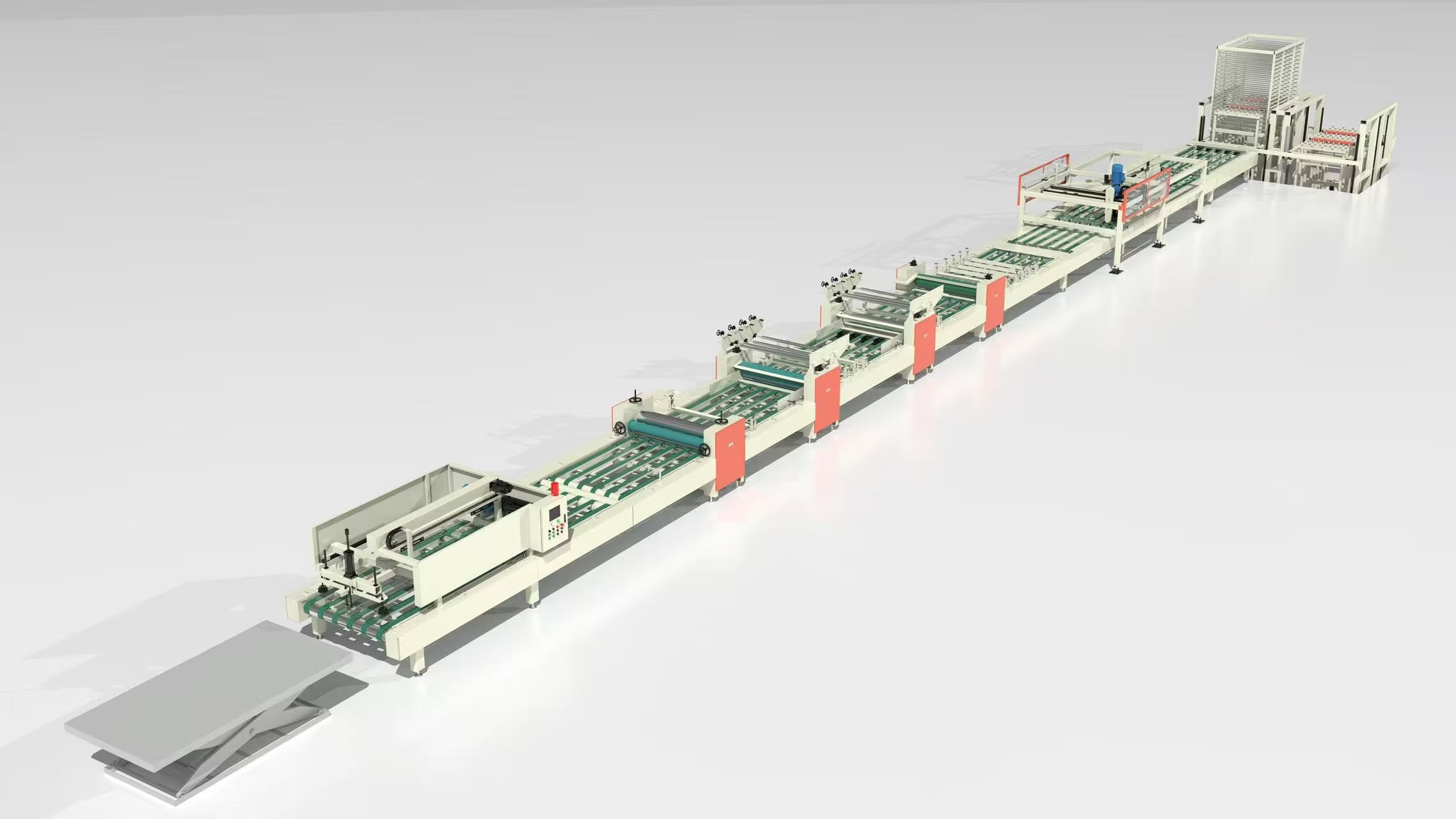
From board requirement to line concept
Define the board and its requirements
Record the exact product expectations and responsible verification route. Do not infer a product guarantee from an equipment feature.
Where the board will be installed and the application it must serve.
Material system, formulation status and product range.
Dimensions, thickness, edge, surface and packaging requirements.
Applicable requirements, test method, specimen and responsible testing party.
Forming, conditioning, finishing and material-handling boundaries.
Product verification, equipment checks and documentation responsibilities.
Connected process modules
Sequence and scope depend on the defined board and material system. Review upstream and downstream conditions at each interface.
Material receiving, storage, dosing and preparation.
Repeatable feed condition and process control.
Forming, thickness setting and early board integrity.
Demoulding, handling and route-specific conditioning.
Cutting, sanding, edge and surface requirements.
Process checks, traceability, stacking and dispatch.
Performance and equipment verification
Project language should distinguish required finished-product performance from what can be tested and accepted on the supplied equipment.
Record relevant standard or customer criteria, test method, specimen, sampling plan and who is responsible for formulation development and finished-board testing.
Agree included functions, control sequences, inspections, test conditions, records and outstanding items under the contracted equipment scope.
Capacity, factory and control basis
The line rhythm is shaped by the whole route: production mix, conditioning, transfer, finishing, storage and dispatch.
Board size, thickness, product mix, hours, shifts and output meaning.
Dimensions, clear height, columns, floor, doors, receiving and dispatch routes.
Utility supply, extraction, maintenance clearances and future expansion.
Recipe responsibilities, permissions, alarms, records and traceability points.
Sampling points, nonconforming-board handling and retained records.
Documents, functional checks, test conditions, party responsibilities and closure of open items.
No. It is a connected route covering material preparation, forming, transfer, required conditioning, finishing and handling. Exact scope depends on the board and material system.
No. Equipment acceptance and finished-product testing serve different purposes. Verify board performance using applicable requirements and agreed testing responsibilities.
Confirm the board range, material information, process route, capacity basis, factory constraints, automation, documentation and project boundaries.
Early agreement connects project requirements to drawings, functions, inspections and records, reducing ambiguity about what will be demonstrated before delivery.
Start with your board requirement
Share the board specification, material information, target output, factory drawing and applicable test requirements. Identify what is confirmed and what still needs review.